











The Death of the Linear Funnel
For decades, marketing was a game of “AIDA”: Attention, Interest, Desire, and Action. We built static landing pages, set up rigid email drip campaigns, and hoped that a lead would eventually trickle down from the top to the bottom.
But in 2026, the “leaky funnel” is a relic of the past.
The digital ecosystem has moved too fast for human-managed workflows. Consumers no longer follow a straight line , they bounce between platforms, ask AI assistants for recommendations, and expect instant, hyper-personalized solutions. To keep up, the world’s fastest-growing companies have stopped building funnels and started deploying Autonomous AI Agents.
At ElanceOne, we are witnessing a fundamental shift: Marketing is no longer about managing tools; it’s about orchestrating intelligence.
Table of Contents
What Are AI Marketing Agents? (The New Growth Engine)

In 2024, we had simple AI tools that required manual prompts. However, according to recent research on the future of marketing with AI agents, the industry has shifted toward goal-oriented, autonomous systems that can execute entire campaigns without human intervention.
AI agents are fundamentally different. An AI agent is goal-oriented. You don’t tell it what task to perform you tell it what outcome you want.
For example, you set a goal: “Increase demo sign-ups by 15% this month.”
The agent does the rest:
- It studies current traffic behavior
- It tests multiple versions of landing pages automatically
- It identifies high-intent visitors across platforms
- It sends personalized follow-ups at the perfect moment
- It shifts marketing budget dynamically toward what is performing best
This is marketing that runs continuously without waiting for human input. It processes thousands of signals every second to make a single conversion more likely.
Scaling beyond human limits means your marketing engine never pauses. It adapts instantly to user behavior and market conditions.
From Passive Content to Active Conversion

Traditional content marketing was passive. You wrote a blog, published it, and hoped the right people would find it. You waited for users to read, click, and eventually convert.
AI agents transform content into an interactive experience.
Instead of static pages, visitors experience dynamic journeys created specifically for them in real time. The website adapts based on who the visitor is, what they are looking for, and how they behave. The agent-led journey looks like this:
Discovery: A potential customer searches for a solution or asks a smart assistant a business question.
Engagement: Your AI agent understands the intent and immediately presents a customized experience showing only the most relevant services or solutions.
Nurturing: Instead of sending generic email sequences, the agent observes behavior. If the visitor checks pricing twice or spends time on a case study, the agent responds instantly with tailored information, a personalized message, or a custom offer.
This turns content into conversation. Visitors no longer browse, they interact.
Hyper-Personalization at Massive Scale
For years, marketers relied on customer personas, five or ten broad categories that grouped thousands of people together. Everyone in a segment received similar messages.
AI agents eliminate segmentation limits.
In 2026, personalization is not about adding a first name to an email. It is about customizing the entire digital experience for every single user.
AI agents can:
- Change website layouts based on whether the visitor is a CEO, developer, or student
- Offer targeted pricing or offers based on user behavior
- Predict when a customer is likely to need an upgrade or service
- Present different case studies to different visitors automatically
This level of personalization cannot be managed by humans. But for AI agents, this is standard operation.
Every visitor sees a version of your brand built just for them.
The Shift from Marketing Qualified Leads to Agent-Qualified Leads
One of the biggest challenges between marketing and sales teams has always been lead quality. Marketing generates leads, and sales often says those leads are not ready to buy.
AI agents remove this friction.
Before a human salesperson ever speaks to a prospect, the AI agent has already interacted with them, understood their needs, and assessed their readiness.
The agent:
- Engages in conversations to understand pain points
- Analyzes behavior to determine seriousness
- Collects important context automatically
- Scores leads based on real signals, not assumptions
By the time the lead reaches sales, they are informed, interested, and ready for meaningful discussion. This is the rise of Agent-Qualified Leads, leads that have already been nurtured intelligently before human involvement.
Why Traditional Marketing Agencies Are Struggling

Many agencies still focus on outdated metrics: number of posts created, number of ads run, hours spent on campaigns.
In the era of AI agents, these metrics do not matter.
Growth in 2026 is measured by:
- How quickly you respond to a potential customer
- How many campaign variations you can test simultaneously
- How efficiently you convert visitors without increasing manpower
AI agents can test thousands of variations in the time a human team tests two or three. They can respond to leads in less than a second. They reduce the cost of acquisition by removing manual overhead.
At ElanceOne, the focus has shifted from manual marketing tasks to building intelligent systems that drive growth automatically. As businesses evolve beyond manual funnels, many also integrate advanced analytics and performance-driven strategies such as our Growth & Digital Marketing services to support AI-led campaigns and measurable ROI across channels
How to Transition to an AI-Led Growth Model
Businesses still operating with linear funnels need a structured transition to agent-led marketing.
Step 1: Centralize Your Data
AI agents need access to your business knowledge—products, services, customer interactions, and brand information. Organizing this data allows agents to act intelligently.
Step 2: Start with a Specific Agent
Do not automate everything at once. Begin with a lead generation agent or a customer support agent. A smart AI chatbot that qualifies leads is often the best starting point.
Step 3: Keep Humans in Strategic Roles
Humans no longer perform repetitive marketing work. Their role is to define goals, protect brand voice, and set ethical boundaries while the agents handle execution.
This partnership between humans and AI creates a powerful growth system.
The Ethical Edge: Marketing with Integrity
With great power comes responsibility.
AI agents must be built with privacy and compliance at their core. Customers are more aware of how their data is used, and trust is essential.
A privacy-first architecture ensures:
- User data is respected and protected
- Communication is transparent and consent-driven
- Automation never crosses ethical boundaries
At ElanceOne, ethical AI design is not optional, it is foundational.
From Funnels to Ecosystems
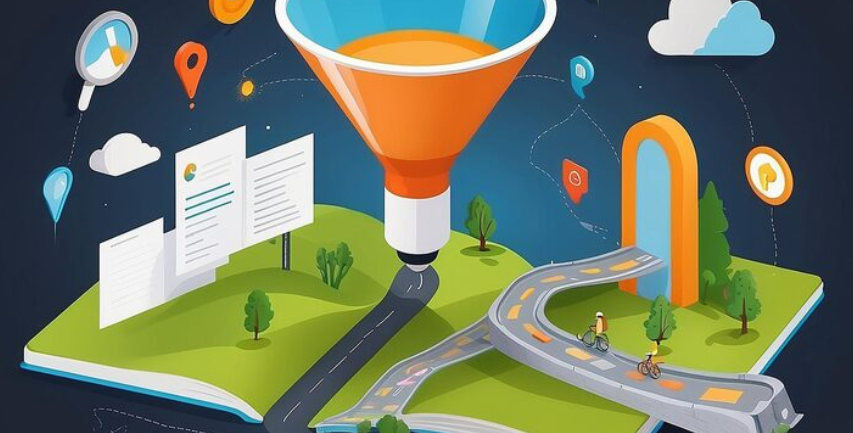
Traditional funnels were linear: awareness → interest → decision → action.
AI agents create ecosystems instead of funnels.
Visitors enter at different points, move in non-linear ways, and interact based on their unique journey. The system adapts to them instead of forcing them through predefined steps.
This fluid journey reflects how modern buyers behave in reality.
Real-Time Optimization Without Human Delay
In traditional marketing, performance reviews happen weekly or monthly. By the time changes are made, opportunities are lost.
AI agents optimize in real time.
They detect what is working and what is not within minutes. They adjust messaging, offers, layouts, and targeting instantly without waiting for meetings or approvals.
This speed creates a competitive advantage that human teams cannot replicate.
The Future of Marketing Teams

Marketing teams are not disappearing. Their roles are evolving.
Instead of creating content and campaigns manually, they:
- Define strategy
- Train and guide AI systems
- Monitor brand consistency
- Focus on creative and innovative growth ideas
AI agents become the workforce. Humans become the architects.
Conclusion: The Future Is Autonomous
The marketing funnel is no longer the center of growth strategy. Autonomous AI agents are.
They observe, decide, act, and optimize at a level far beyond human capability. They turn static websites into interactive experiences. They turn leads into conversations. They turn data into immediate action.
Businesses that adopt agent-led growth will scale without increasing headcount, respond faster than competitors, and deliver deeply personalized customer experiences.
Those that continue relying solely on traditional funnels will struggle to keep up.The question is no longer whether AI agents will replace traditional marketing funnels.
The question is whether your business is ready to orchestrate them.