














AI drives scalable industry growth across sectors by transforming traditional operations into intelligent, adaptive ecosystems. In 2026, artificial intelligence is no longer experimental or isolated within innovation labs. It is embedded into infrastructure, powering decision-making, strengthening compliance, improving operational efficiency, and unlocking measurable revenue expansion.
From banking and healthcare to manufacturing, retail, energy, government, and logistics, organizations are accelerating modernization efforts. However, full system replacement is costly, disruptive, and operationally risky. The smarter approach is strategic intelligence layering. This is where AI-driven digital transformation creates sustainable scalability without destabilizing core systems.
Industries that embrace this shift are not simply automating tasks. They are redefining how growth is engineered.
Table of Contents
Why AI Drives Scalable Industry Growth in 2026
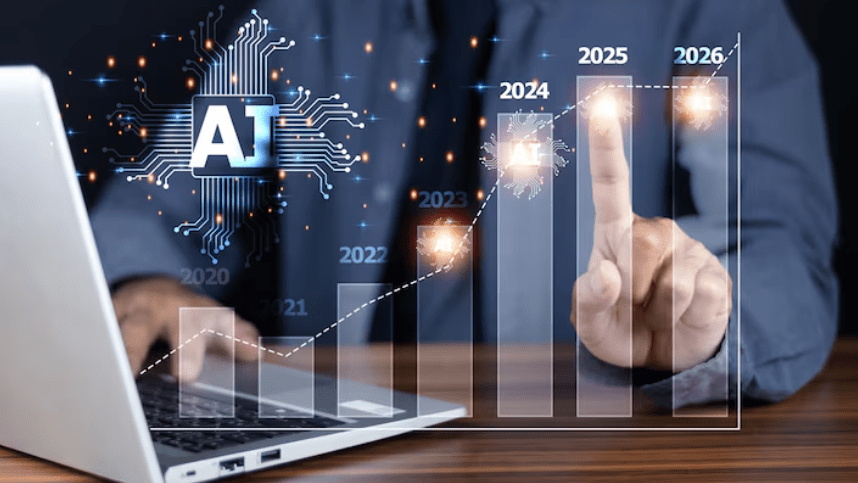
Modern industries generate massive volumes of data. According to research highlighted by the World Economic Forum, AI adoption across industries is accelerating as organizations prioritize automation, predictive analytics, and intelligent infrastructure to remain competitive. Without intelligence, that data remains dormant. AI drives scalable industry growth by converting raw information into predictive insights, operational automation, and real-time optimization.
Organizations leveraging AI-driven digital transformation experience:
- Faster executive decision-making
- Reduced operational bottlenecks
- Lower compliance risk
- Improved customer engagement
- Sustainable long-term scalability
This shift represents a structural advantage, not a temporary technological trend.
Banking & Financial Services: Secure Intelligence at Scale

Financial institutions operate in environments defined by regulation, compliance, and high transaction volumes. AI drives scalable industry growth in banking by embedding intelligence directly into transaction monitoring, fraud detection, and risk modeling systems.
AI Applications in Banking:
- Real-time fraud detection through anomaly recognition
- Automated compliance monitoring
- AI-powered credit risk assessment
- Predictive financial analytics
- Intelligent customer support automation
Rather than reviewing thousands of transactions manually, AI systems detect irregular behavior instantly. Fraud prevention becomes predictive. Risk management becomes data-driven. Regulatory compliance becomes automated and traceable.
AI-driven digital transformation in banking reduces operational strain while strengthening security and scalability.
Healthcare & Life Sciences: Precision Through Intelligence
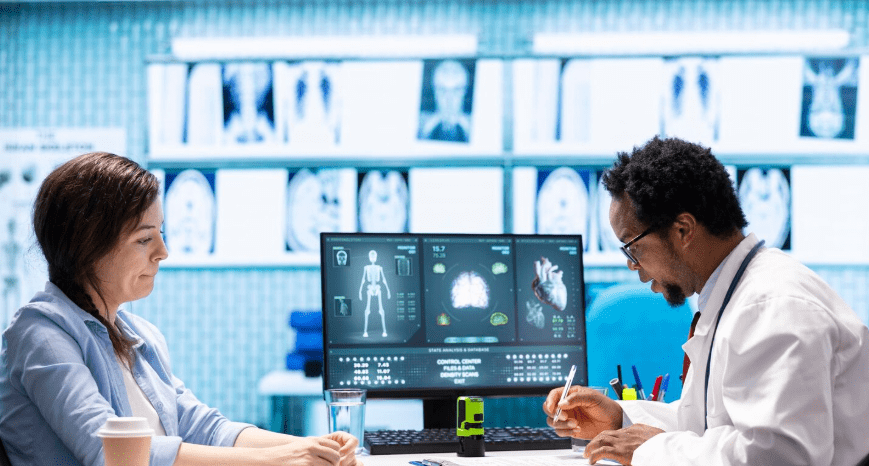
Healthcare systems depend on data accuracy, compliance, and workflow coordination. AI drives scalable industry growth in healthcare by improving diagnostic precision, optimizing administration, and enabling secure patient data integration.
AI in Healthcare:
- AI-assisted clinical decision support
- Predictive patient risk modeling
- Intelligent medical imaging analysis
- Administrative workflow automation
- Secure interoperability systems
When AI analyzes historical patient data, early intervention becomes possible. Administrative inefficiencies decrease. Data accessibility improves without compromising privacy regulations.
This is AI-driven digital transformation focused on better outcomes and operational resilience.
Retail & E-Commerce: Revenue Powered by Data

Retailers operate in competitive markets where personalization determines profitability. AI drives scalable industry growth in retail by transforming consumer behavior data into real-time revenue strategies.
Core Retail AI Capabilities:
- Personalized product recommendation engines
- Demand forecasting systems
- Inventory optimization
- Dynamic pricing algorithms
- Automated marketing segmentation
AI-driven digital transformation enables retailers to anticipate customer intent, reduce inventory waste, and optimize pricing strategies dynamically. Growth becomes structured rather than reactive.
Manufacturing & Supply Chain: Predictive Operations
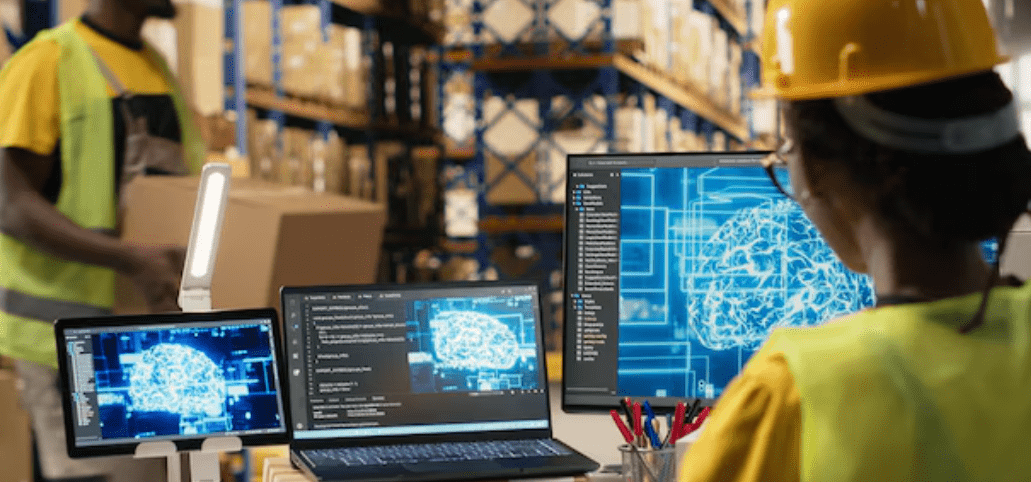
Manufacturing operations rely on uptime, precision, and logistical coordination. AI drives scalable industry growth by introducing predictive maintenance and process optimization.
AI in Manufacturing:
- Equipment performance prediction
- Automated quality assurance
- Intelligent supply chain forecasting
- Real-time operational monitoring
- Workflow automation systems
Instead of reacting to machinery failures, manufacturers prevent them. Instead of guessing supply demand, AI systems analyze historical and real-time variables.
AI-driven digital transformation reduces downtime and increases system resilience.
Government & Public Sector: Intelligent Modernization

Public institutions must balance modernization with regulatory oversight and transparency. AI drives scalable industry growth in government by enhancing service efficiency and fraud detection without replacing core infrastructure.
Government AI Capabilities:
- Automated documentation processing
- Intelligent case management
- Predictive budget allocation
- Fraud detection systems
- Citizen engagement automation
Through AI-driven digital transformation, governments modernize securely while maintaining compliance and public trust.
Energy & Utilities: Smart Infrastructure Optimization
Energy providers face fluctuating demand and infrastructure complexity. AI drives scalable industry growth by introducing predictive analytics into grid management and resource allocation.
AI Applications:
- Energy demand forecasting
- Predictive equipment diagnostics
- Infrastructure performance monitoring
- Resource distribution optimization
AI-driven digital transformation enables adaptive energy systems that increase efficiency and sustainability simultaneously.
Logistics & Transportation: Real-Time Efficiency at Scale

Logistics companies depend on speed and cost optimization. AI drives scalable industry growth by optimizing fleet performance, delivery routes, and warehouse automation.
AI in Logistics:
- Dynamic route optimization
- Fuel efficiency analysis
- Predictive delivery scheduling
- Real-time shipment visibility
- Warehouse intelligence systems
AI-driven digital transformation improves delivery accuracy, reduces operational cost, and enhances customer satisfaction.
Overcoming Legacy System Barriers
Many industries rely on legacy systems that restrict scalability. These outdated infrastructures often create:
- Data silos
- Manual bottlenecks
- Security vulnerabilities
- Limited analytical capabilities
- High operational overhead
AI drives scalable industry growth most effectively when deployed as an intelligent overlay rather than a disruptive replacement.
The Intelligent Overlay Strategy
Instead of rebuilding entire systems, organizations integrate AI as a structured intelligence layer.
This enables:
- Faster implementation cycles
- Reduced modernization risk
- Lower capital expenditure
- Seamless scalability
- Continuous system evolution
AI-driven digital transformation becomes manageable, measurable, and strategically aligned with business objectives.
A Structured Framework for AI Implementation
To ensure AI drives scalable industry growth, organizations must follow a disciplined approach:
1. Infrastructure Assessment
Evaluate workflows, compliance constraints, and data ecosystems.
2. Intelligence Mapping
Identify high-impact automation and predictive analytics opportunities.
3. Layered AI Deployment
Integrate AI modules without disrupting operational continuity.
4. Continuous Optimization
Refine algorithms and scale capabilities as business needs expand.
Scalability is achieved through iterative improvement, not one-time deployment.
The Competitive Advantage in 2026
Organizations that adopt AI-driven digital transformation strategically outperform competitors. They transition from reactive operations to predictive ecosystems.
They reduce downtime.They lower operational cost.They increase revenue efficiency.They strengthen compliance.They scale securely.
AI enables scalable industry growth by turning operational complexity into structured intelligence.
Final Thoughts: Intelligence Is the New Growth Engine

From banking to logistics, AI enables scalable industry growth by embedding predictive capability into everyday operations. The industries leading in 2026 are not those replacing infrastructure recklessly. They are those modernizing intelligently.
AI-driven digital transformation is not about technology hype. It is about engineering systems that learn, adapt, and scale.
The future belongs to organizations that build smarter foundations, deploy intelligence responsibly, and scale with precision.
How ElanceOne Solves Complex Industry Challenges with Intelligent Solutions
Modern industries face growing pressure to scale operations, reduce risk, modernize legacy systems, and improve efficiency all without disrupting existing infrastructure. This is where ElanceOne delivers measurable impact.
ElanceOne helps organizations overcome industry-specific challenges by integrating AI-powered intelligence, secure architecture, and scalable digital systems into existing environments. Instead of forcing risky system replacements, we implement structured transformation strategies that enhance performance, automate workflows, and improve decision-making across operations.
From banking compliance automation to logistics route optimization, from healthcare data interoperability to retail personalization engines, ElanceOne builds intelligent ecosystems tailored to each sector’s operational complexity.
Our approach focuses on:
- Legacy system modernization without disruption
- AI-powered automation and predictive analytics
- Secure and compliant digital infrastructure
- Scalable web and enterprise application development
- Performance optimization for long-term growth
We don’t just build platforms , we engineer growth-ready systems designed for stability, scalability, and measurable ROI.
If your organization is navigating operational bottlenecks, compliance pressures, or digital transformation challenges, explore how ElanceOne supports industry-specific innovation here:
Learn more about our industry solutions: Industries